What is a Dimensioner, and How Does it Impact Shippers – What You Should Know

ltl shipping parcel shipping parcel package dimensioner
Facebook
Twitter
LinkedIn
Print
Email
What is a Dimensioner?

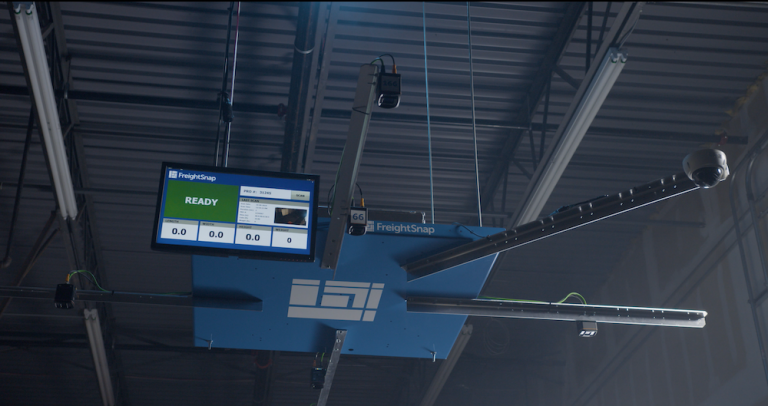
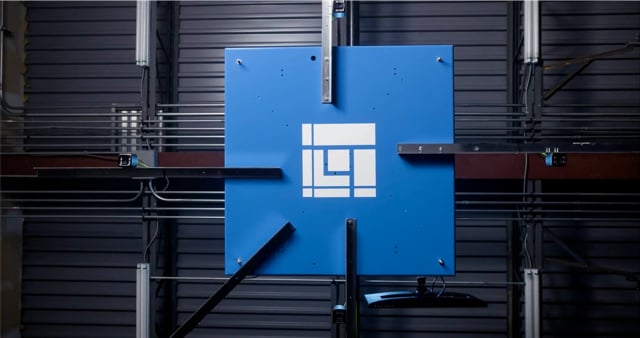
If you’ve heard the term “dimensioner,” “dimensionalizer” or “pallet dimensioner” tossed around with increasing frequency in the last few years, you’re not alone. These terms and others have been used interchangeably to talk about the equipment that’s being used to reshape the LTL industry in the United States. But what is a dimensioner exactly?

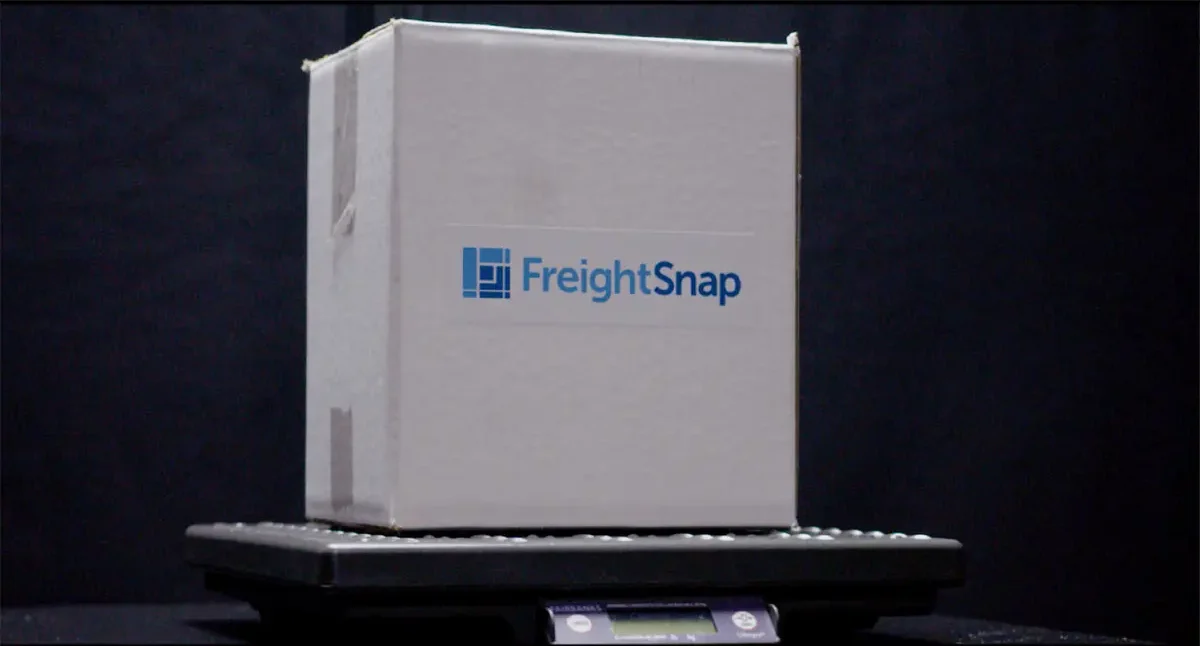
According to Wiktionary, a dimensioner is “a weight and volume measuring device or machine for measuring three-dimensional or cube shaped objects such as packages, parcels, cartons or boxes,” and while that’s certainly a fitting description, there’s plenty more to know.
pallet dimensioner
Wait A Minute – Reshape The LTL Industry?

Over the last few years, LTLs operating in the United States have increasingly moved from a weight and class-based pricing model to a dimensional weight pricing model in an effort to collect revenue based on the space being occupied on their trailers – a model which has been in use globally for years – instead of the total weight hauled.

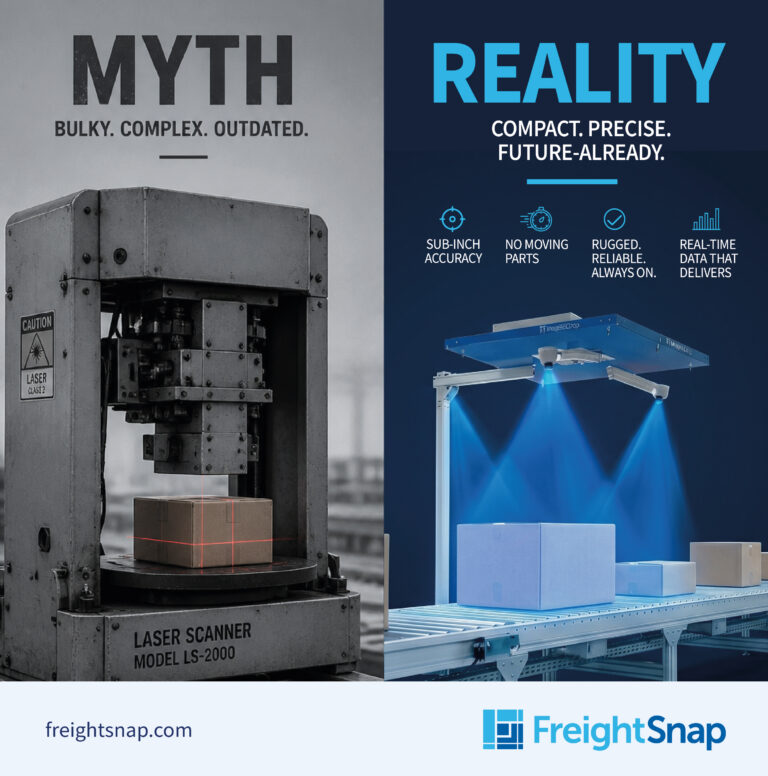
Prior to the introduction of automatic dimensioning equipment, a pricing model like this would have been impossible to implement given the large number of shipments that pass through carrier cross docks each day. Measuring freight by hand simply wasn’t fast, or accurate enough to keep up.

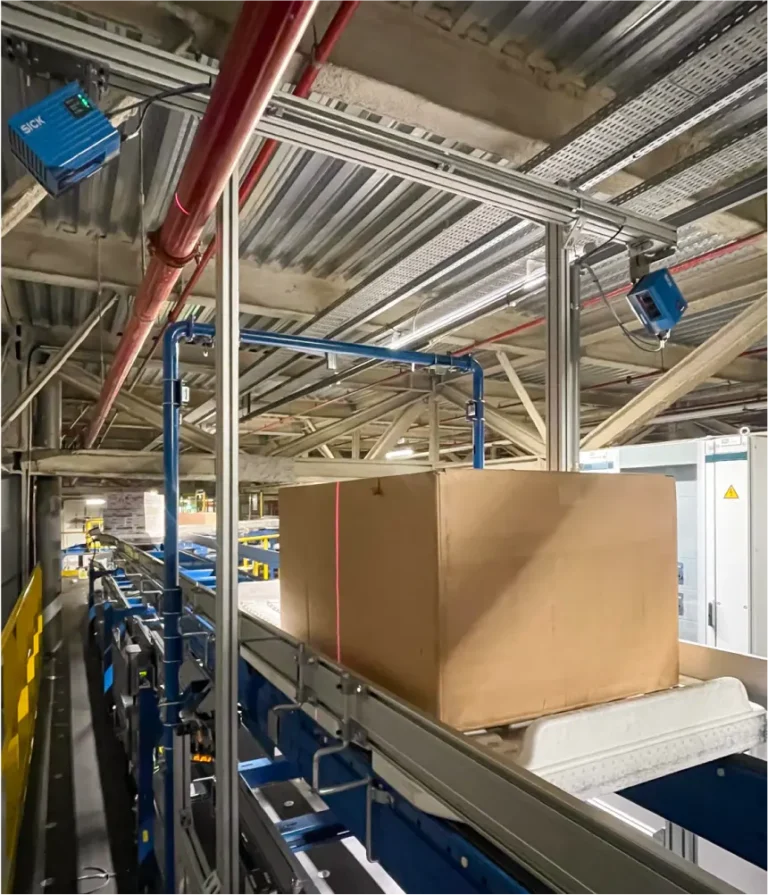
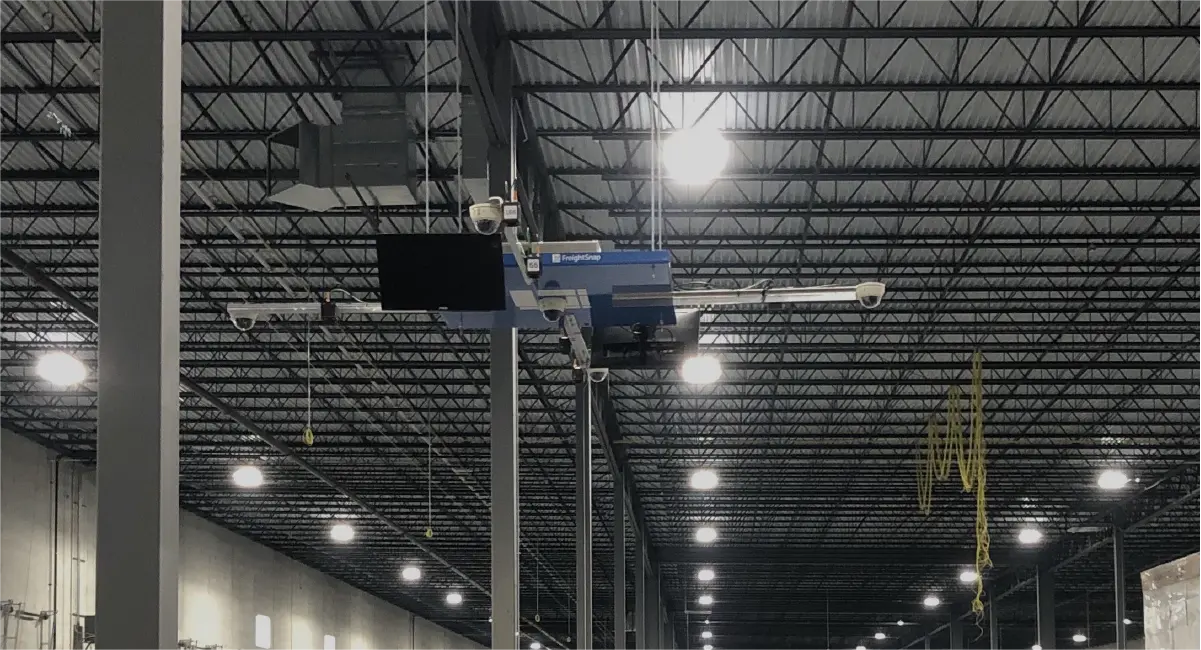
Today however, dimensioners allow carriers to measure and catalog thousands of shipments daily with pinpoint accuracy.

What This Means For Shippers

Before the wide-spread use of dimensioning equipment, shippers could submit ballpark measurements of their palletized freight with little to no fear of being penalized for inaccuracy, which makes sense; when carriers were forced to measure shipments by hand, only the most egregious measurement errors submitted by shippers were flagged.

With dimensioners in place, however, carriers are paying much closer attention to the accuracy of measurements provided by shippers. As a result, many shippers are seeing an uptick in billing adjustments and freight re-classifications.

How Can Shippers Adapt To These Changes?

Increase the density of freight. Try to eliminate “dead space” in your parcel and palletized shipments, and if possible, reduce the overall size of your freight’s footprint while ensuring that goods are still adequately protected and secured.

Doing so might not have mattered as much before DIM weight pricing, but it assuredly makes a big difference today.

Measure carefully. It seems obvious, but ensuring the accuracy of measurements can save you a lot of time, money and hassle down the road. If you’re a low-volume shipper that dimensions each pallet by hand, measure the maximum length, width and height of your shipments. If you see protrusions on any side, account for them.

If you’re a high-volume shipper, look at purchasing a pallet dimensioner yourself. Many high-volume shippers, 3PLs and forwarders are already using dimensioning technology to ensure accurate measurements and avoid rate adjustments.

Profile your freight. If you haven’t already developed profiles or “templates” of common shipment sizes, consider making it a priority. To do so, record the dimensions and weight of every shipment you send over a specified time period – a few months is usually sufficient. If measuring and recording shipments by hand is too time consuming, a dimensioner can expedite the process exponentially by measuring and cataloging shipments automatically. Some dimensioning companies even offer to import your data into the WMS, TMS or ERP systems you’re already using.

After you’ve collected your data, identify the shipment sizes and weights you frequently used, and if necessary, devise new ways to arrange and pack those shipments for maximum density. Use this information to create your freight profiles. Later, you can send these profiles to carriers for quicker quoting, or even use them to renegotiate rate agreements and volume-based discounts.

Looking Ahead: What The Future Of Dimensioning Holds
pallet dimensioning shipments pallet dimensioner


Since their adoption worldwide, dimensioner usage has trended up. With more and more U.S. based carriers now joining the fray, dimensioners and dimensional weight pricing appear to be here for the long haul.

If you’d like to learn more about dimensioning, or you’re curious about implementing a parcel dimensioner or pallet dimensioner yourself, we’d love to hear from you. Feel free to contact us at any time.

For more articles like this, subscribe to our newsletter!

Was this article helpful?

Michael Eichenberg is the co-founder and CEO of FreightSnap, allowing the supply chain, logistics, manufacturing, distribution and transportation industries to measure, weigh, photograph and ID pallets and parcels in just seconds. Learn more and share your ideas on Facebook and LinkedIn.
Subscribe to our Blog

Stay up to date with our latest news, receive exclusive deals, and more.

2023 Newsletter Subscription Contact Form

Subscribe to Our Blog

Stay up to date with our latest news, receive exclusive deals, and more.

Challenges in Modern Shipping Shippers today are faced with all sorts of logistics challenges. Lost shipments, damaged freight, reweigh charges and size reclassifications to name a few. “Most of our Shipper customers have experienced all sorts of issues, which is why we decided to craft a great documentation solution to...

The 2019 trade show season is about to kick off, and FreightSnap is getting in on the action at a few of the biggest events in transportation and logistics. Stop by and see us at any of the following shows to learn more about our dimensioners and see why so...

Your warehouse is busy: From speeding forklifts to shrink-wrapping pallets and the nonstop flow of ticketing systems, it’s hard to know where you can save time and prevent bottlenecks. The pandemic has created an increased reliance on e-commerce fulfillments and has made fast shipping for online orders not only necessary...

Shipping internationally can be a headache even for experienced shippers, which is why freight forwarders have become such an important part of the modern supply chain. From storing customers’ freight and verifying shipment details to ensuring that the appropriate customs, insurance and shipping documentation has been provided, a lot of...

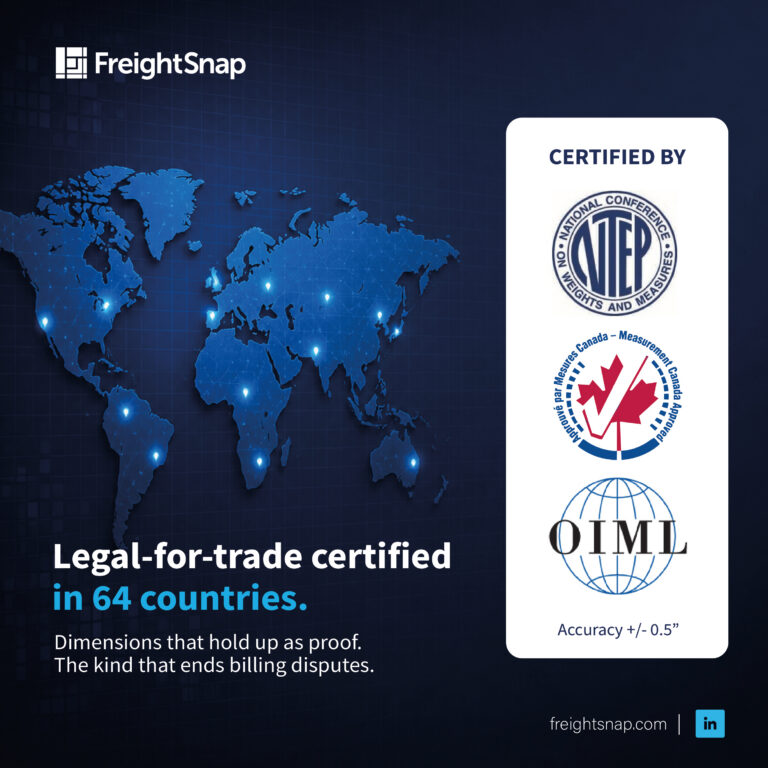
Did you know the FS 5000 is legal-for-trade certified in 64 countries? That’s not a vanity stat. NTEP, OIML, and Measurement Canada certification means your dimensions hold up as proof – the kind that ends billing disputes instead of starting them. Here’s what that certification buys you in the real...

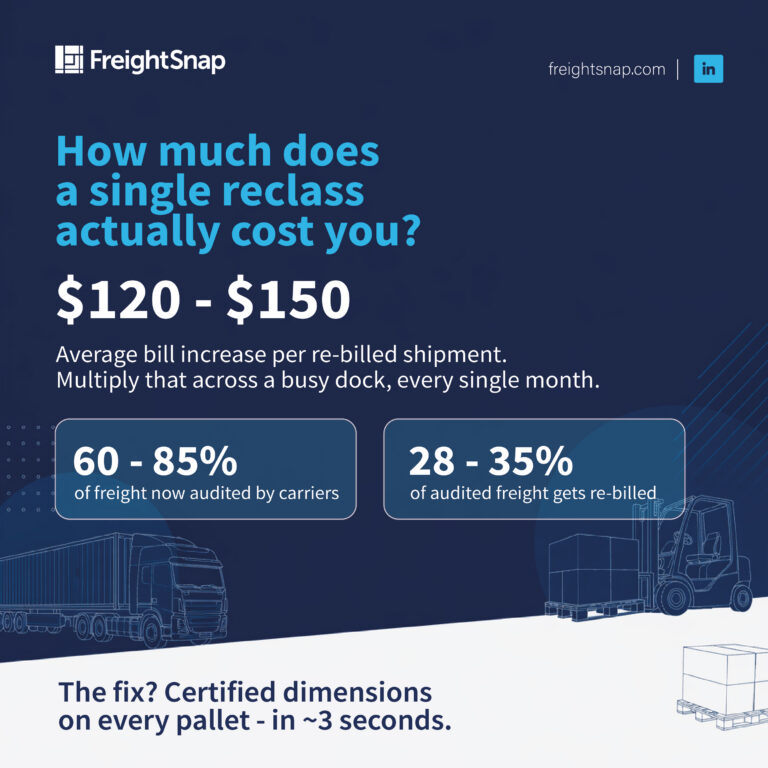
Quick question for the warehouse crowd: how much does a single reclass actually cost you? Because here’s what the numbers say. Carriers now audit 60-85% of freight. Roughly 28-35% of that gets re-billed. And the average increase lands between $120 and $150 per shipment. Multiply that across a busy dock...

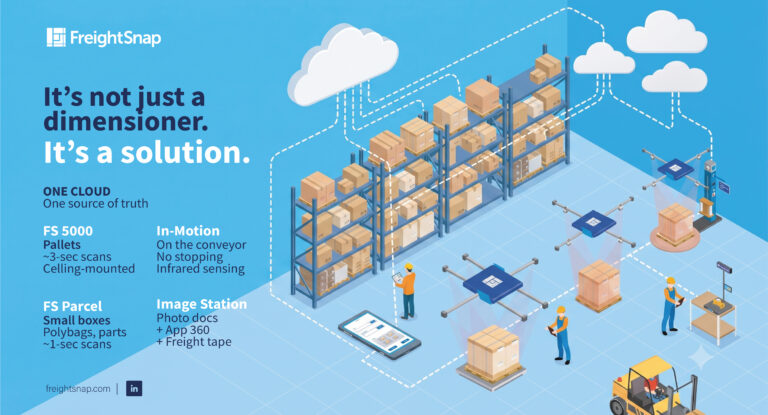
“It’s not just a dimensioner, it’s a solution.” That line does a lot of heavy lifting, so let me unpack it. When you bring in a FreightSnap dimensioner, you’re not just measuring boxes. You’re getting a system that: – Protects you from re-bills and quote adjustments with certified dimensions –...

Subscribe to our Blog

Stay up to date with our latest news, receive exclusive deals, and more.

You have the latest pallet wrapping equipment. You take great care to correctly package your freight, wrap it, and prepare it for shipment. You’ve even purchased the right size of pallets to avoid needless shipping charges due to unused space. Then what happens? The dreaded reclassification from the carrier.  ...

Nearly one in three LTL invoices doesn’t match the original quote. That’s a trust problem. For decades, the LTL industry has struggled with a simple problem: too many invoices don’t match the original quote. Unexpected accessorial charges, reclasses, and reweighs create unnecessary disputes between shippers, carriers, and 3PLs. The result...

Still measuring freight with a tape measure? It’s costing you more than you think. Swipe through the 5 hidden costs of manual dimensioning — and what automation actually fixes. (#4 is the one that sneaks up on people.) The good news: fixing this isn’t the budget-buster everyone assumes. Modern infrared...

Where you install your freight dimensioner can have a big impact on the efficiency of your operation. The following graphic lays out some basic rules regarding install location, which can help you get the most out of your automatic dimensioner. Download the PDF version to keep a copy for yourself,...

Did you know the FS 5000 is legal-for-trade certified in 64 countries? That’s not a vanity stat. NTEP, OIML, and Measurement Canada certification means your dimensions hold up as proof – the kind that ends billing disputes instead of starting them. Here’s what that certification buys you in the real...

Quick question for the warehouse crowd: how much does a single reclass actually cost you? Because here’s what the numbers say. Carriers now audit 60-85% of freight. Roughly 28-35% of that gets re-billed. And the average increase lands between $120 and $150 per shipment. Multiply that across a busy dock...

“It’s not just a dimensioner, it’s a solution.” That line does a lot of heavy lifting, so let me unpack it. When you bring in a FreightSnap dimensioner, you’re not just measuring boxes. You’re getting a system that: – Protects you from re-bills and quote adjustments with certified dimensions –...

Product Sheet - FS Parcel Dimensioner

2023 DimReimag LP - FSParcel PS Dwnld

Product Sheet - FS 5000 Dimensioner

2023 DimReimag LP - FS500 PS Dwnld

Request a Quote!

2023 DimReimag LP Pricing Request Form